Review: Teeth ‘N’ Smiles
Teeth ‘N’ Smiles has enjoyed a lengthy run during this 2026 revival at the Duke of York’s Theatre, celebrating 50 years since prolific writer David Hare’s rock and roll musical took to the stage starring Helen Mirren as the work’s darkly charismatic protagonist Maggie Frisby. Similarly, this production brings some star-studded value to the cast with pop artist Rebecca Lucy Taylor (formerly of Slow Club fame), now professional performing as ‘Self Esteem’. How does Hare’s work stand now?

Photo: Helen Murray
This production is pleasantly refined – its large cast are handled with great balance inside a great space, which playfully leans into the immersive qualities of the venue as the late 1960’s rockers burst in and out of the stalls doors that flank the audience with an amusingly entropic quality. Chloe Lamford’s set design has a compelling realism and enormous depth which is managed with a wise theatrical approach – a transporting stage brings the fictitious band ‘The Skins’ to the cliff-face of the stage, which accentuates the immediacy and primacy of the music, especially as the group wield it as a cultural weapon. It also allows us to see in greater detail the collapsing composure of frontwoman Maggie Frisby as the potency of their hedonistic, radical liberalism disintegrates in real-time before us through Frisby’s drunken tirades and the bands dissolving confidence in their ambitions.

Photo: Helen Murray
Hare’s script is both predictably acerbic about the cultural climate of the time, yet surprisingly scathing about the ineffectiveness of musical counterculture. It harks on familiar tropes of idealistic ‘taking it to the man’ defiance being toothless when launched from a pedestal of abrasive escapism. It frames the groups hedonism as a decadent, futile and destructive force – which whilst it may be, feels an unforgiving way of framing certain pockets of the wider Western counter-cultural movement of the 1960’s which has had lasting, positive effects that can be felt today. The danger of such top-heavy framing results in a work that feels almost prudish at times despite the depicted impulsive indulgences, with a scathing ideological backbone that ironically possesses an oppressive likeness. That said, what has unproblematically survived the scathes of time is the witty, comedic traits of Hare’s text – there are plenty of laughs here which remain exciting and undated. At times just clever, at other times outrageous – it really nicely balances that, making the humour of the work enjoyably invasive.
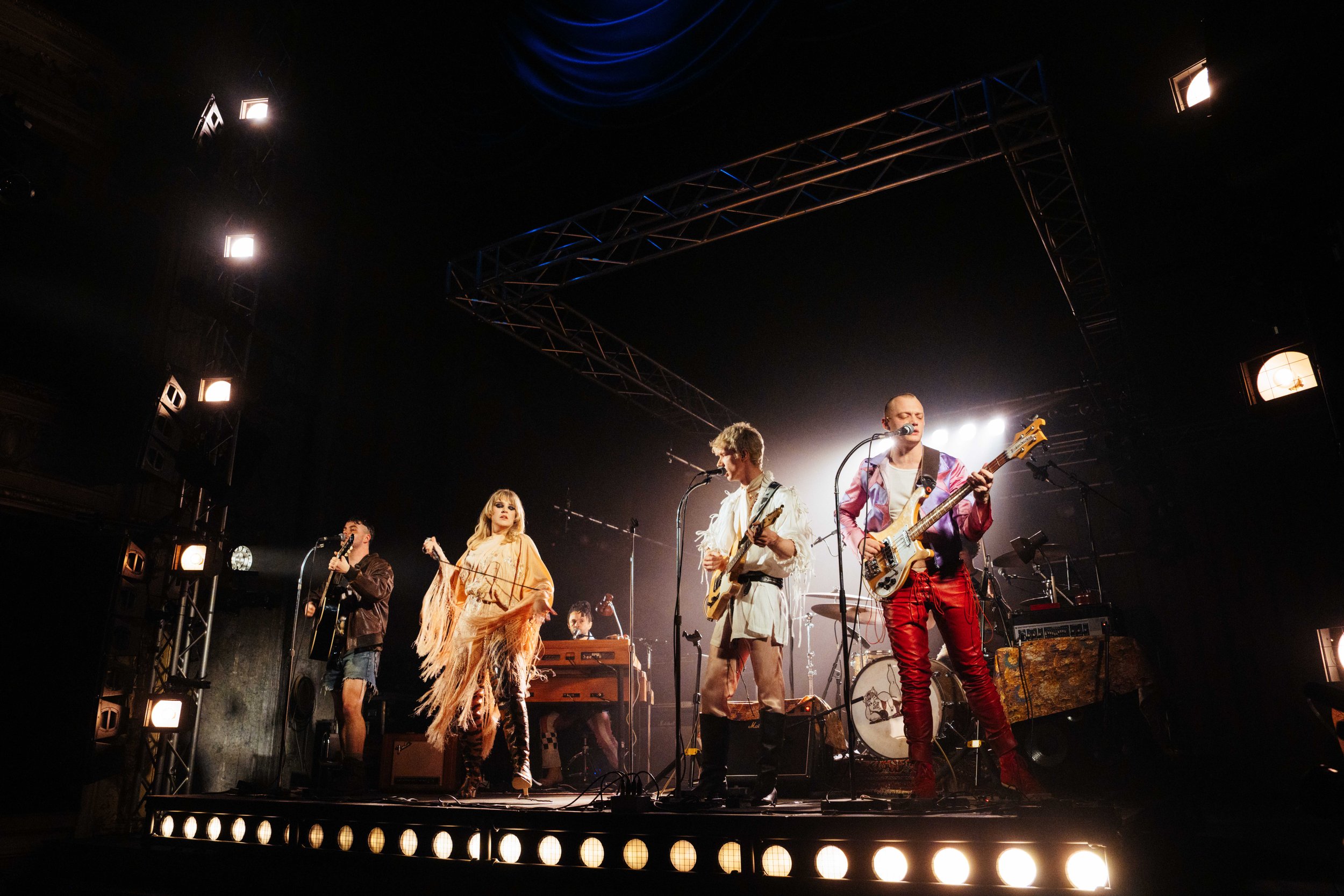
Photo: Helen Murray
Read the rest at: https://northwestend.com/teeth-n-smiles-duke-of-yorks-theatre/